

THE CHANGING FACE OF AGED CARE
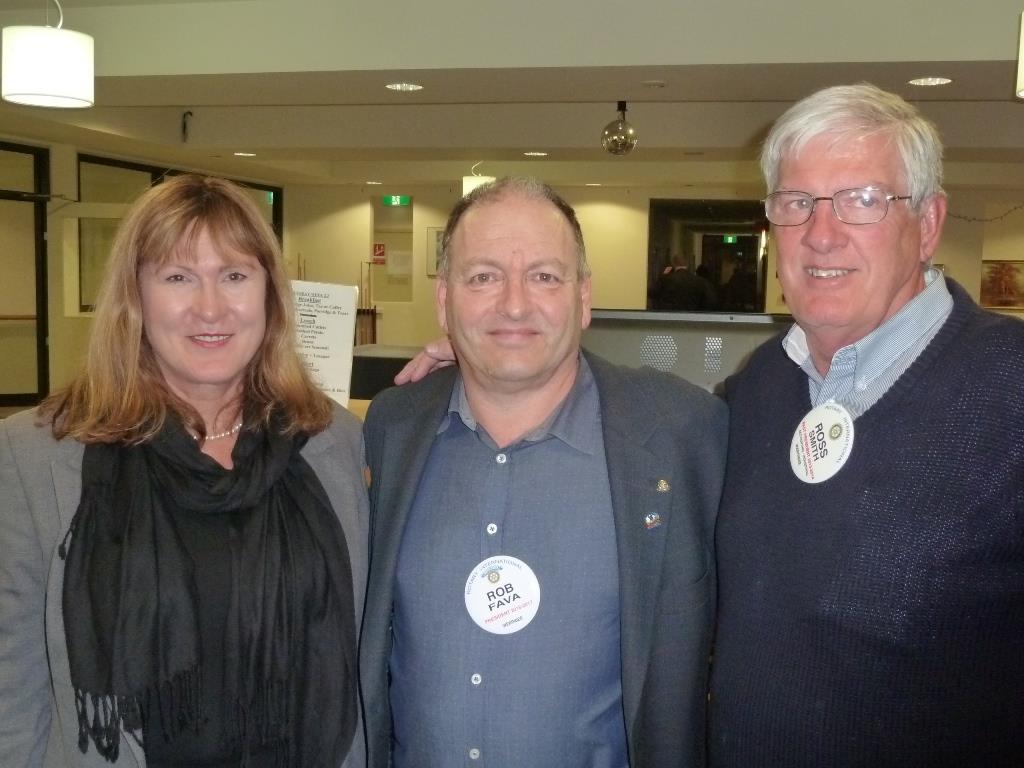
Prior to the presentation by the guest speaker, Ross Smith provided the audience with a brief history of Manor Court.
In 1974, the Rotary club initiated a public meeting to assess the need for elderly accommodation in the community. Roland Wade became the first chairman of the committee. After obtaining a grant from the Federal Government and acquiring land from the Shire of Werribee, construction of Manor Court commenced in 1978.
The facility was officially opened in September 1979 with 18 units. There have been 5 expansions since then, the latest being in 2010 which increased the capacity to 100 beds. To this day, Manor Court Aged Care remains a not-for-profit residential aged care facility.
Rotarians who are either past or present members of the Board include Ian Knight, Jeff Garfield, Peter Ross, Lou Dowling, Tino Ballan, Ross Smith and Ian Hovey.
Our guest speaker was Veronica Jamison, who is the CEO of Leading Age Services Australia (LASA). LASA has been in existence for 50 years. Each state has had their own self-governing entity but, in July 2016, all state bodies merged into a national organisation. It was felt that they needed a combined voice to lobby for aged people to the Federal Government.
Veronica provided some interesting and disturbing statistics:
- By 2050, the world's population of aged people will reach 2 billion and will be larger than the younger population for the first time in history.
- The number of senior Victorians will increase from 920,000 to 1.4 million within the next 15 years (57% increase).
- The number of seniors in Wyndham will increase by 100% in the next 15 years.
- Wyndham will require an additional 1500 aged care beds at a cost of $376 million.
- We will need to spend $33 billion throughout Australia over the next 15 years to supply an extra 76,000 beds.
- The bad news is that the Australian Government does not have the money so it will need to come from the not-for-profit and private sectors.
- 1 in 8 people work in the aged care and associated industries. This will increase as the population ages. Therefore, training is important because different roles will be required to support the changing needs of our senior citizens.
- More people are choosing to stay at home rather than moving to an aged care facility. But this presents a whole set of new challenges including how they will need to be managed when they are not capable of looking after themselves.
- The Living Longer Living Better reforms were introduced by the Government in 2013. These reforms are meant to deliver more support and care at home, additional home and residential care places, a focus on greater consumer choice and control, greater recognition of diversity and support to carers.
- As part of the reforms, funding for residential aged care has been cut by $3.1 billion since 2014. This is a huge disincentive for any new providers. It is also a major concern for existing providers, 35% of whom are not technically viable.
Veronica believes that technology will play a major role in aged care services in the future. There is an urgent need to develop new high tech solutions. Among other things, effective use of technology can sustain the increasing demand for seniors to stay at home.